
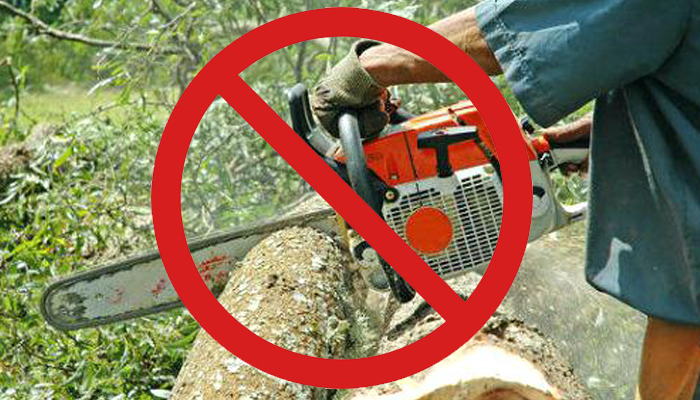
Cutting trees in India is not freely permitted. It is regulated by a combination of central laws, state laws, local municipal rules, and court directions. Unauthorised tree cutting can attract heavy fines, imprisonment, and environmental compensation.
This article explains the key laws that prohibit or regulate tree cutting in India, along with penalties and legal remedies.
1. Indian Forest Act, 1927
The Indian Forest Act, 1927 is one of the primary laws governing forests and forest produce.
Key Provisions
- Prohibits cutting, damaging, or removing trees from reserved or protected forests without permission
- Applies to both government and notified forest land
Punishment
- Imprisonment
- Fine
- Confiscation of tools, vehicles, or timber involved in the offence
2. Forest (Conservation) Act, 1980
This Act protects forest land from diversion and deforestation.
What the Law Says
- Forest land cannot be used for non-forest purposes without prior approval of the Central Government
- Cutting trees on forest land—even for development projects—requires clearance
Penalty
- Criminal liability for authorities and individuals involved
- Projects may be stopped or cancelled
- Environmental compensation may be imposed
3. State Tree Preservation Acts
Most Indian states have their own Tree Preservation Acts, such as:
- Maharashtra (Urban Areas) Tree Protection and Preservation Act
- Delhi Preservation of Trees Act, 1994
- Karnataka Preservation of Trees Act, 1976
Common Provisions
- Permission from the Tree Officer or local authority is mandatory before cutting trees
- Even trees on private property often require approval
Penalty
- Fine (often ranging from ₹1,000 to ₹1 lakh per tree)
- Imprisonment in serious cases
- Mandatory plantation of replacement trees
4. Environment (Protection) Act, 1986
This Act empowers the government to protect the environment, including trees.
Use in Tree-Cutting Cases
- Applied in cases of large-scale deforestation
- Used against projects harming ecological balance
Punishment
- Imprisonment up to 5 years
- Fine up to ₹1 lakh, with additional fines for continuing offences
5. Municipal and Local Body Laws
Urban local bodies regulate tree cutting through:
- Municipal bye-laws
- Development authority regulations
Permission is required even for:
- Roadside trees
- Trees in housing societies
- Trees affecting construction work
6. Supreme Court and High Court Directions
Indian courts have taken a strict view against illegal tree cutting.
Key Principles
- Trees are essential to the right to life under Article 21
- Environmental protection outweighs commercial interests
- Compensatory afforestation is mandatory in many cases
Courts often impose:
- Heavy environmental fines
- Mandatory replantation
- Criminal proceedings
Exceptions Where Tree Cutting May Be Allowed
Tree cutting may be permitted if:
- The tree is dead, diseased, or dangerous
- It poses a threat to life or property
- Permission is granted for public infrastructure projects
Even in these cases, prior approval is usually compulsory.
How to Report Illegal Tree Cutting
You can report illegal tree cutting to:
- Forest Department
- Municipal Corporation or Tree Officer
- District Collector
- Pollution Control Board
- File a complaint in court or Green Tribunal (NGT)
Photographs, videos, and location details strengthen complaints.
Conclusion
In India, cutting trees without permission is illegal, whether on public land or private property. Multiple laws exist to preserve greenery and protect ecological balance. Anyone planning to cut a tree must follow the prescribed legal procedure—or face serious legal co
Protecting trees is not just a legal obligation but a constitutional duty under Article 51A(g).