
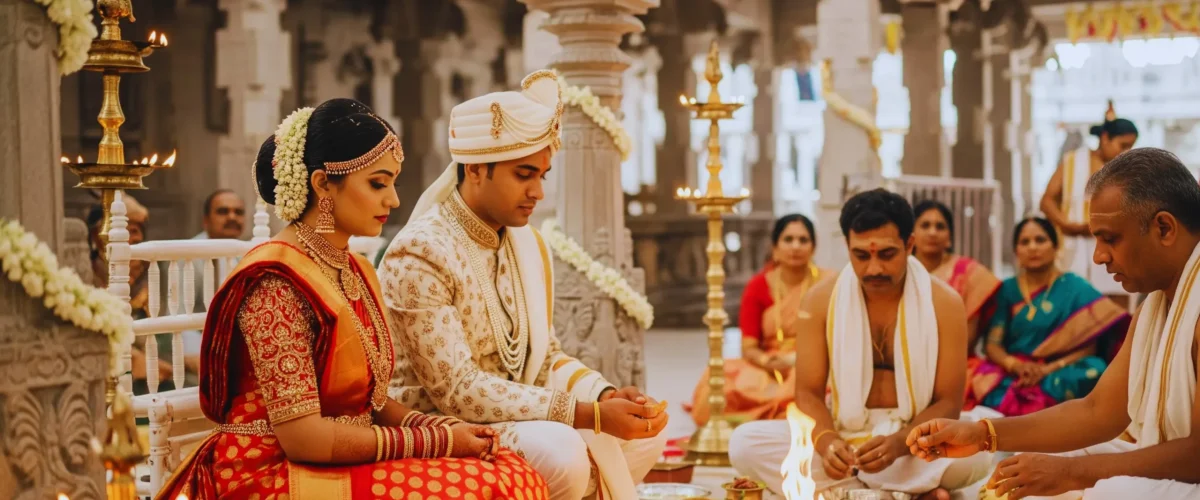
Temple marriages are deeply rooted in Indian tradition and are widely practiced across the country. While such marriages hold strong religious and cultural significance, many couples wonder whether a temple marriage is legally valid in the eyes of Indian law. The answer depends on how and under which law the marriage is performed and registered.
Let’s break it down clearly.
Is a Temple Marriage Legal in India?
Yes, a temple marriage can be legally valid, but only if it meets the legal requirements laid down under Indian marriage laws. Merely performing rituals in a temple does not automatically grant legal recognition unless certain conditions are fulfilled.
When Is a Temple Marriage Legally Valid?
A temple marriage is legally valid if:
1. It Is Performed According to Personal Law
- Hindus, Buddhists, Jains, and Sikhs can marry under the Hindu Marriage Act, 1955
- Essential ceremonies (such as saptapadi, if customary) must be performed
- Both parties must meet legal conditions (age, consent, monogamy, mental capacity)
2. Marriage Is Registered
- Registration with the Marriage Registrar is crucial
- A marriage certificate acts as legal proof for:
- Passport and visa applications
- Property and inheritance claims
- Spousal rights and benefits
- Court proceedings
Important: Registration strengthens legality but does not replace valid ceremonies.
Is Temple Marriage Valid Without Registration?
- Religiously valid: Yes
- Legally weak: Yes
Without registration, a temple marriage may face challenges when proving marital status in legal or administrative matters. Courts strongly recommend registration to avoid disputes.
What If You Married Under the Special Marriage Act?
If the marriage is interfaith or not conducted under religious rites, it must comply with the Special Marriage Act, 1954, which requires:
- 30-day public notice
- Registration before a Marriage Officer
- Witnesses and documentation
A temple ceremony alone does not qualify under this Act.
Documents Needed to Register a Temple Marriage
- Proof of age (birth certificate, passport, Aadhaar)
- Address proof
- Photographs of the ceremony
- Temple marriage receipt (if available)
- Affidavits
- Two or three witnesses
Common Misconceptions
❌ A temple receipt alone is legal proof
❌ Rituals automatically make marriage valid everywhere
❌ Registration is optional forever
✔ Registration is strongly advised and often essential
Conclusion
A temple marriage in India can be legally valid, but only when it follows the applicable personal law and is properly registered. Religious ceremonies alone are not enough to guarantee full legal protection. To avoid future complications, couples should ensure timely registration and compliance with legal requirements.