
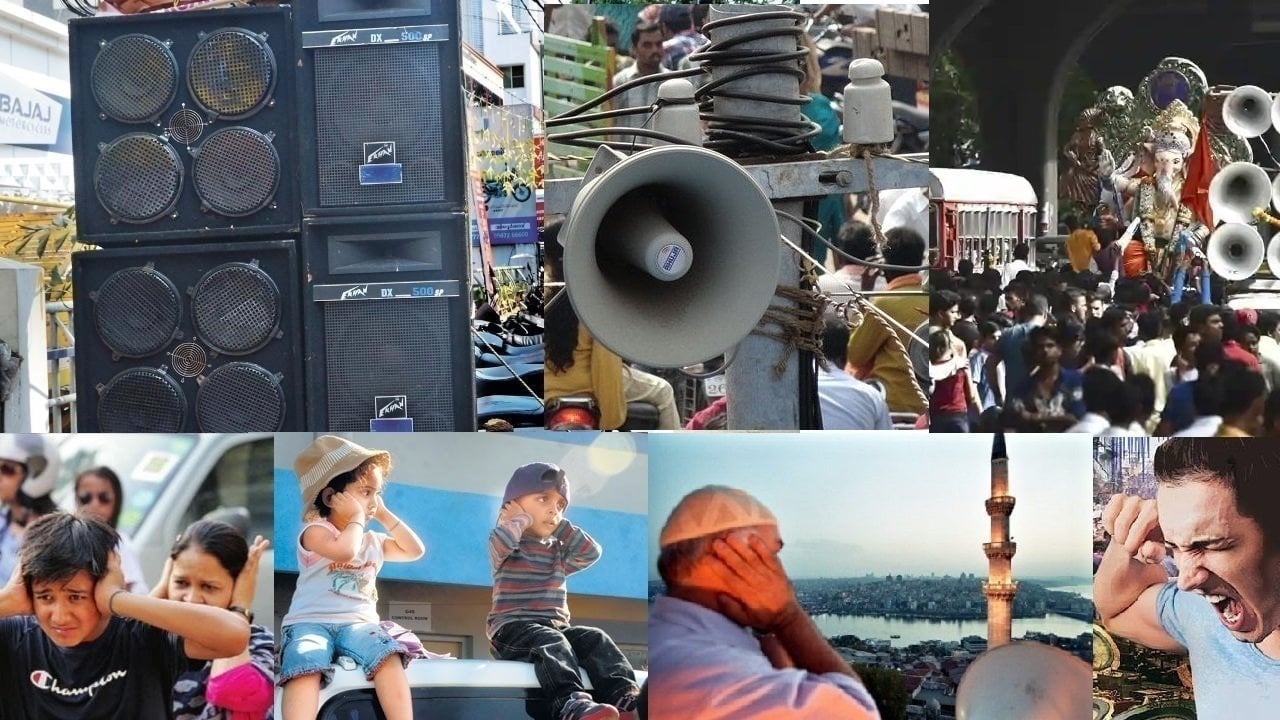
In India, noise is often taken lightly. Many people do not even realise when their activities—loud music, parties, construction work, or celebrations—begin to disturb the mental peace of others. While occasional noise is unavoidable, continuous or excessive noise can seriously affect a person’s health, sleep, and quality of life.
If you have been dealing with noisy neighbours for a long time, ignoring the issue may only worsen the situation. That is why Indian law provides several remedies to protect citizens from noise pollution. This article explains what constitutes noise pollution in India and the laws that can help you deal with noisy neighbours.Noise disturbance is one of the most common problems faced by residents in urban India. While occasional sounds are unavoidable, continuous or excessive noise can seriously affect health, sleep, and peace of mind. Indian law provides multiple remedies to deal with noisy neighbours—both informal and legal
Step One: Try Resolving the Issue Amicably
Before taking legal action, it is advisable to:
- Speak directly to your neighbour and explain the inconvenience caused by the noise.
- If the neighbour is a tenant, inform the house owner or landlord.
- If you live in a housing society, contact the building supervisor, RWA, or society management.
If these steps fail and the disturbance continues, legal remedies are available.
Noise Pollution (Regulation and Control) Rules, 2000
Noise is legally recognised as a form of air pollution under the Air (Prevention and Control of Pollution) Act, 1981. Complaints can be made to the Central or State Pollution Control Boards under Sections 16 and 17 of the Act.
Night-Time Noise Restrictions
- Loudspeakers and public address systems are prohibited between 10:00 p.m. and 6:00 a.m.
- This restriction applies to personal, professional, and religious activities.
Under Rule 7, you may approach the appropriate authority (usually through the police). If the authority is satisfied with the report, they can take immediate action, including stopping the activity altogether.
Permissible Noise Limits (in dB(A))
| Area Code | Category | Day | Night |
|---|---|---|---|
| A | Industrial Area | 75 | 70 |
| B | Commercial Area | 65 | 55 |
| C | Residential Area | 55 | 45 |
| D | Silence Zone | 50 | 40 |
Powers of Authorities
Under Rule 8(1), authorities may issue written orders prohibiting:
- Use of loudspeakers, horns, or musical instruments
- Bursting of crackers
- Noisy trades or industrial activities
- Any process generating excessive noise
Religious Noise and Supreme Court Ruling
In Church of God (Full Gospel) in India v. K.K.R. Majestic Colony Welfare Association (AIR 2000 SC 2773), the Supreme Court held that:
No religion prescribes that prayers should be performed by disturbing the peace of others.
The Court clarified that religious freedom does not include the right to use loudspeakers or drums if it disturbs residents, particularly the elderly, children, students, or infirm persons.
Police Act, 1861
If neighbours conduct religious events or public processions without permission, you can seek police intervention.
- Section 30 empowers police officers to regulate or prohibit processions on public roads.
- Section 30A allows police to stop events that breach licence conditions or disturb public peace.
- Section 32 provides for a fine of ₹200 for violations.
In such cases, you can immediately call 100 or 112.
2. Noise Pollution (Regulation and Control) Rules, 2000
These rules were introduced to regulate noise levels and ensure peaceful living conditions.
Key provisions include:
- No loudspeakers or public address systems between 10:00 p.m. and 6:00 a.m.
- Specific decibel limits are prescribed for residential, commercial, industrial, and silence zones.
- Violations allow residents to approach the police or local authorities for immediate action.
3 . Indian Penal Code (IPC), 1860
The IPC treats excessive noise as a publle nuisance.
- Section 268 defines public nuisance as an act that causes annoyance or inconvenience to the public.
- Section 290 provides punishment for public nuisance, imposing a fine of up to ₹200 on the offender.
For example, repeatedly playing loud music or drums that disturb others can attract action under these provisions.
4. Constitutional Protection
Noise pollution also violates fundamental rights under the Constitution:
- Article 21 (Right to Life) includes the right to live with dignity, peace, and proper sleep.
- Article 25 (Freedom of Religion) allows religious practices only as long as they do not disturb public order, health, or the rights of others.
Loud religious or festive activities that disturb neighbours are not protected as essential religious practices.
How to File a Noise Pollution Complaint
You may dial 112 (Police Helpline) if:
- Noise occurs between 10 p.m. and 6 a.m.
- Daytime noise exceeds permissible limits
- Activities are conducted without prior permission
If the noise continues even after police warning:
- Visit the local police station
- Lodge an FIR
- The police will investigate, and the State will prosecute the offence
For persistent industrial or commercial noise (factories, pubs, construction sites), the matter may be referred to the State Pollution Control Board.
Delhi Police Special Helpline
If you are in Delhi, additional remedies are available:
- Call 155271
- File a complaint at ngms.delhi.gov.in
- Complaints are automatically escalated to the ACP or SDM for prompt action
Remedies Under the Indian Penal Code (IPC), 1860
- Section 268: Defines public nuisance
- Section 290: Provides punishment for public nuisance with a fine of ₹200
Noise after 10 p.m. can directly attract IPC action, especially if warnings are ignored.
Constitutional Protection
Excessive noise violates:
- Article 21 (Right to Life) — includes the right to sleep, health, and peaceful living
- Article 25 (Freedom of Religion) — subject to public order, morality, and health
Loud and disruptive activities are not considered essential religious practices.
Conclusion
Indian law strongly protects citizens against noise pollution. While peaceful coexistence is encouraged, persistent or unlawful noise can and should be challenged through legal channels. Residents are entitled to a healthy, peaceful environment—and the law supports that right.