
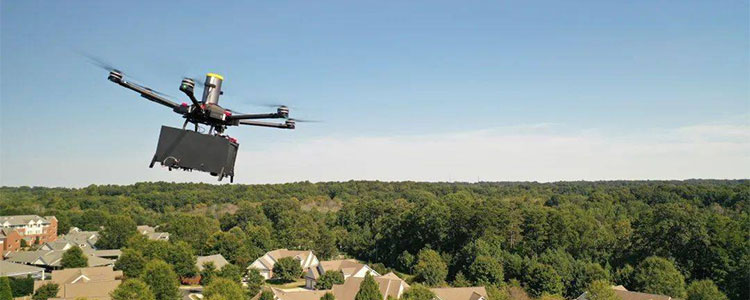
With rapid advancements in technology, drone delivery has emerged as a promising solution for faster and more efficient transportation of goods. From medicines and food to e-commerce parcels, drones have the potential to transform last-mile delivery in India. However, the key question remains: is drone delivery legal in India?
Legal Status of Drone Delivery in India
Yes, drone delivery is legal in India, but it is strictly regulated. The operation of drones, including their use for delivery purposes, is governed by rules issued by the Directorate General of Civil Aviation (DGCA) under the framework of the Information Technology and aviation laws.
India allows drone operations only when they comply with prescribed rules related to registration, licensing, safety, and airspace usage. Drone delivery is permitted mainly through government-approved trials, pilot projects, and licensed operators.
What Are the Legal Rules for Using Drones for Delivery in India?
As India modernizes its logistics and delivery systems, the government has introduced a comprehensive regulatory framework to govern the use of drones. The Ministry of Civil Aviation, through the Drone Rules, 2021, laid down detailed guidelines allowing companies to use drones for delivery purposes, provided they comply with prescribed legal and safety requirements. These rules marked a significant shift by simplifying approvals and encouraging commercial drone operations.
Further easing the process, the Drone (Amendment) Rules, 2022 reduced regulatory hurdles for businesses. The framework covers key aspects such as drone registration, operational permissions, pilot certification, airspace usage, and safety standards. Companies must ensure that drones are properly registered, flown according to approved procedures, and operated in a manner that does not endanger people or property.
Challenges and Limitations
Despite having a clear regulatory structure, launching drone delivery services in India remains challenging. Several companies, including food and e-commerce platforms, have begun testing drone deliveries on a pilot basis to assess feasibility. However, strict operational limitations still apply.
One major restriction is the requirement for drones to remain within the visual line of sight of the operator, which significantly limits flight range and large-scale commercial use. Additionally, operating drones safely in densely populated areas poses serious challenges. The lack of widespread drone infrastructure and air traffic management systems further slows down expansion.
The Future of Drone Deliveries in India
India’s drone sector is at a crucial stage of growth. Government initiatives such as incentive schemes for drone manufacturing and supportive policies are expected to boost the industry significantly by 2025–2030. However, large-scale drone delivery adoption will depend on resolving legal, safety, and practical challenges.
Policies like the National Unmanned Aircraft System Traffic Management (UTM) Policy and the National Logistics Policy, 2022 aim to create a seamless ecosystem for drone operations. These initiatives are designed to improve airspace coordination, safety oversight, and logistics efficiency, paving the way for wider adoption of drone-based deliveries across the country.
Regulatory Framework Governing Drone Delivery
DGCA Drone Rules
Drone usage in India is regulated by DGCA guidelines that categorize drones based on weight and purpose. For delivery operations:
- The drone must be registered
- The operator must be authorized or licensed
- The flight must occur in approved airspace
- Compliance with safety and privacy standards is mandatory
Unauthorized drone delivery operations can attract penalties, fines, or confiscation of equipment
Use Cases Where Drone Delivery Is Allowed
Drone delivery has been permitted in limited but significant areas, including:
- Delivery of medical supplies and vaccines
- Transportation of essential goods in remote or inaccessible regions
- Controlled trials for e-commerce and logistics companies
These operations are closely monitored to ensure safety, security, and regulatory compliance.
Privacy and Safety Concerns
Drone delivery raises important concerns related to:
- Public safety
- Airspace security
- Data and privacy protection
Operators must ensure drones are equipped with safety features and do not violate the privacy of individuals while flying over residential or public areas.
Penalties for Illegal Drone Delivery
Operating delivery drones without authorization may result in:
- Monetary fines
- Seizure of the drone
- Legal action under aviation and IT laws
Strict enforcement ensures that drones are used responsibly and do not pose risks to public safety.
Conclusion
Drone delivery is legal in India, but only within a regulated and controlled framework. While the government is actively encouraging innovation in drone technology, unrestricted drone delivery is not permitted. Businesses and individuals must comply with DGCA regulations and obtain necessary approvals before launching drone delivery services.
As regulations continue to evolve, drone delivery is expected to become more accessible, paving the way for faster, safer, and smarter logistics across the country.